


When to Plant Xeriscape in Brighton, CO: Frost Timing + Establishment Windows
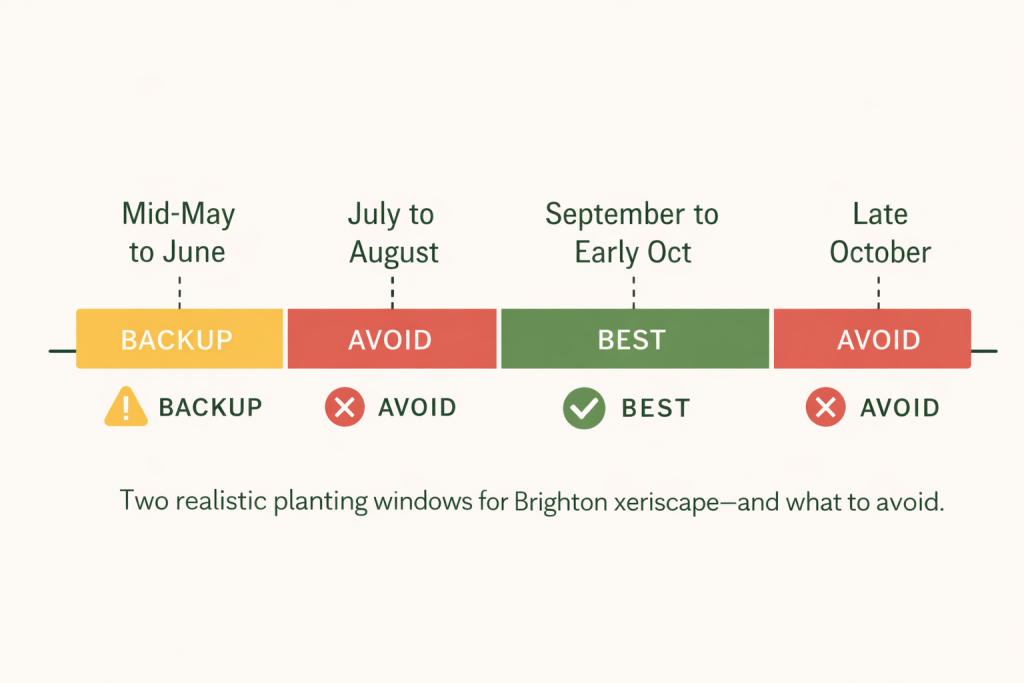
Brighton gives you two realistic planting windows for xeriscape: early fall (best) and late spring (backup). The difference is mostly how much establishment watering you’re willing to manage.
Best: September to early October
Backup: Mid-May through June (once soil is workable)
Avoid: July–August (heat stress + watering limits) and late October (too little time before freezes)
Quick timing guide by plant type:
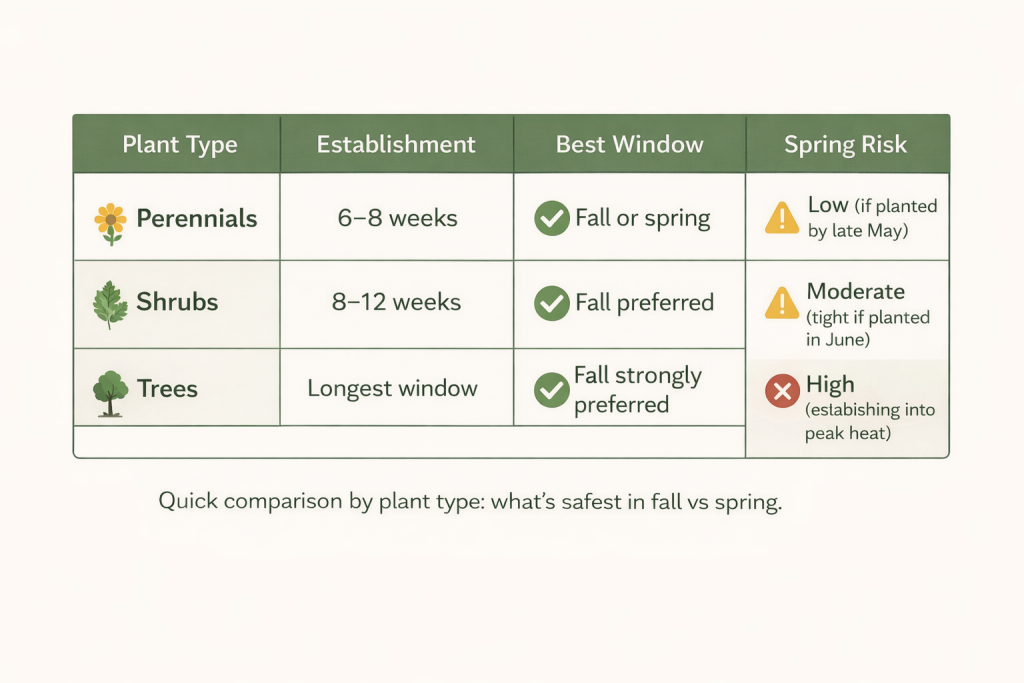
- Perennials + shrubs: Fall or spring both work
- Trees: Fall strongly preferred (they need the longest establishment window)
- Spring timing: Wait until soil is workable (not waterlogged from snowmelt)
Fall Planting (September-Early October) – Better Establishment, Less Stress
Fall planting works better in Brighton. Simple reason: you’re not competing with heat during establishment.
Why fall has the advantage:
- Cooler temps (60s-70s) = plants focus on rooting, not managing heat stress
- Natural precipitation picks up = less supplemental watering needed
- Plants establish before dormancy = emerge strong in spring, already anchored
- Lower watering demand = easier to work within Brighton’s 3-day schedule
From Brighton projects, fall xeriscape installs show stronger first-year performance. Plants come back in spring already established. Spring installs spend their first summer still rooting—some make it, but the stress shows.
Trees benefit most from fall timing because they need the longest establishment window before extreme heat or hard freezes. Planting in early September gives them that window before the ground freezes.
Timing target: Start after Sept 1, finish by early October. Later than mid-October cuts establishment time too short.
Spring Planting (Mid-May Through June) – Works for Perennials + Shrubs
Spring planting works in Brighton if timing and conditions align. But there are two challenges.
Challenge #1: Waterlogged soil
Early spring soil stays saturated from Front Range snowmelt and spring rains. You can’t plant in muddy soil without compacting it and damaging root zones. Wait until soil is workable—digs easily, doesn’t clump or stick to tools. By the time soil dries out, you’re often looking at late May.
Challenge #2: Racing summer heat
Once you plant, establishment happens during Brighton’s hottest months. Brighton’s seasonal restrictions run May 1–Sept 30 and limit outdoor watering to three days per week:
- Even addresses: Sun/Tue/Fri
- Odd + Unassigned: Mon/Wed/Sat (which leaves Thursday as a non-watering day)
- No watering 10 a.m.–6 p.m., and don’t allow water to pool in gutters, streets, or on property
Plants need consistent moisture during the 6-8 week establishment period. This is manageable with drip irrigation systems or soaker hoses on timers, but it requires more attention than fall planting—monitoring weather, checking soil moisture, adjusting as temps climb into the 80s and 90s.
When spring timing works:
Perennials and smaller shrubs handle spring well if planted by late May. They establish roots faster (6-8 weeks) and can transition into summer heat if watered correctly.
Larger shrubs need 8-12 weeks, so timing gets tighter. Planting shrubs in June means they’re still establishing through July and August.
Trees face the toughest conditions. A May planting puts peak root development in July and August—driest, hottest months. Fall planting eliminates that stress.
Plant Type Timing Comparison
Not all xeriscape plants establish at the same rate, and root development time determines how flexible your planting window is. Here’s how perennials, shrubs, and trees compare:
The difference shows by the following summer. Fall-planted trees typically show stronger growth and better drought tolerance than spring-planted trees that struggled through establishment.
Months to Avoid (And Why)
July-August: Peak heat, full watering restrictions, and plants trying to establish roots in 85-95°F temps while competing with sun and Front Range winds. Some contractors offer summer installs because of availability, but scheduling convenience doesn’t equal best practice.
Late October (after Oct 10): Brighton’s average first fall frost is around Oct 2 (historical estimates, not guarantees—weather can swing year to year). Planting after mid-October doesn’t give plants enough time to establish before the ground freezes.
Early spring (March-April): Soil too cold and often too wet. Brighton’s average last spring frost is around May 8, so frost risk remains through April.
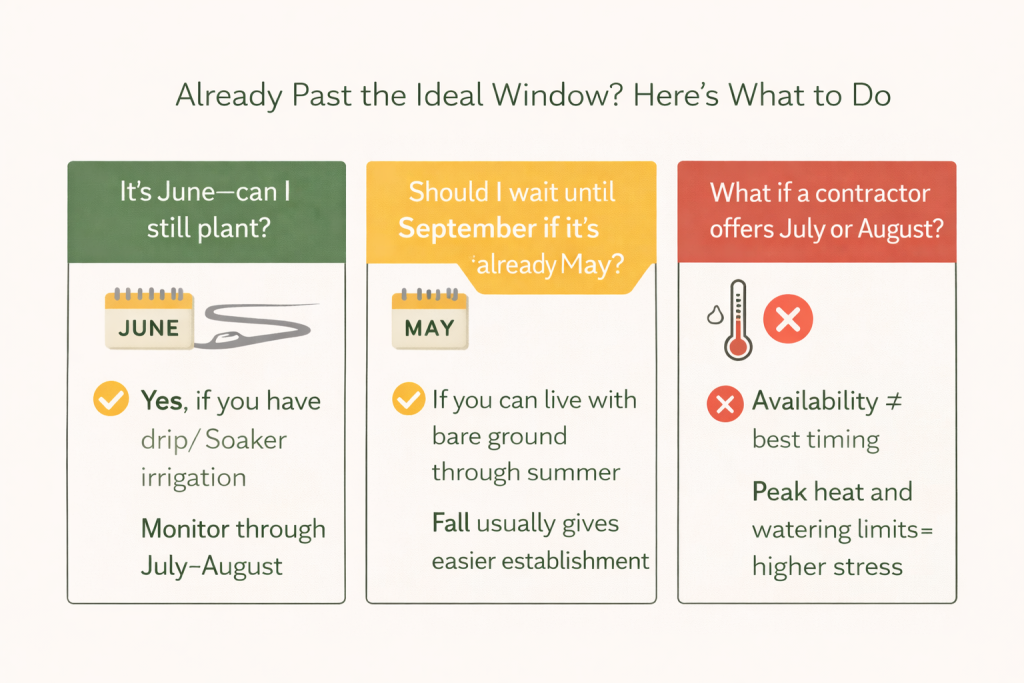
Already Past the Ideal Window? Here’s What to Do
If you’re outside the main fall or spring windows, the decision to plant now versus waiting depends on what you’re installing and whether you can manage establishment watering through Brighton’s hottest or coldest months.
How ER Landscaping Plans Installations
ER Landscaping schedules most Brighton xeriscape installs in fall because plants establish with less stress, and results show by the following summer.
When clients ask about spring timing, the decision depends on plant types, site conditions, and whether the irrigation setup can handle establishment watering within Brighton’s three-day schedule.
The key is designing xeriscape and irrigation systems together—drip systems aligned with Brighton’s watering rules deliver moisture at the root zone during establishment, not across the entire yard. This matters during the 6-8 week period when plants are most vulnerable.
Site prep happens weeks before planting season. Soil amendments, drainage grading, and base material for pathways need time to settle. Starting the conversation early ensures proper prep—which makes the difference between smooth establishment and plants that struggle from day one.
On Front Range sites, the biggest failures we see aren’t “bad plants”—they’re poor soil prep, sloppy edging, and no establishment plan that matches Brighton’s schedule. We plan the irrigation and layout together so new plants get moisture at the root zone without wasting water.