Fire Pit Installation in Brighton CO — Options, Materials, and What the Build Involves

Brighton has enough cold evenings from April through October to use a fire pit regularly. The setups below hold up through Colorado winters and account for the Front Range wind patterns that make a standalone bowl impractical in most Brighton yards.
A Built-In Concrete Fire Pit With Integrated Seating Wall Is the Most-Used Setup in Brighton
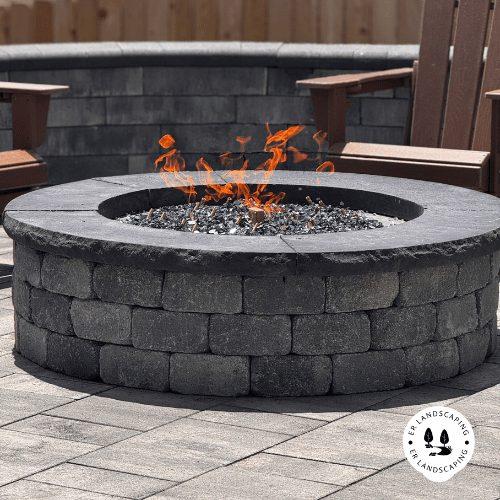
A concrete block fire pit with a seating wall is the most common built-in setup in Brighton because it anchors the outdoor space and solves the wind problem at the same time. The seating wall defines the gathering area and keeps furniture from shifting with the prevailing west winds. Nothing in the space needs to move every time the weather changes.
The base uses concrete block with a fire brick liner inside. The block handles freeze-thaw cycles; the liner handles the heat cycles from the fire. That combination holds up through Brighton winters and summer use without cracking. The structure is the same for gas and wood-burning. Only the burner changes.
A patio installation in Brighton that incorporates this setup uses the same base preparation process as the patio. The fire pit integrates with the patio footprint from the start rather than being placed on top of a finished surface.
A Linear Gas Fireplace Integrates With the House and Works Under a Covered Structure
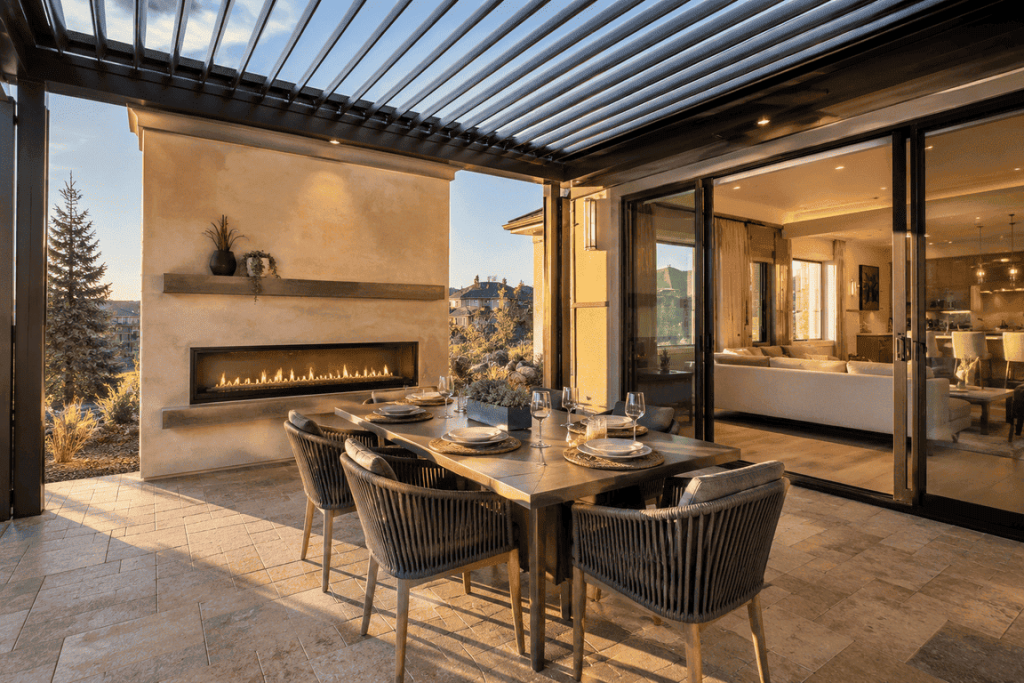
A linear gas fireplace brings a low horizontal profile to the outdoor space. The design extends the interior style toward the yard and works as a backdrop behind a dining zone or an outdoor kitchen rather than as a centerpiece.
Gas means no smoke, no ash and no restrictions on the days Brighton’s air quality rules limit open burning. A linear fireplace under a pergola or covered structure does not need the open ventilation that a wood-burning setup requires. If no gas line exists in the yard area, ER Landscaping coordinates that extension as part of the project scope.
A Gas Fire Table Doubles as Furniture and Handles Brighton’s Wind Better Than a Bowl
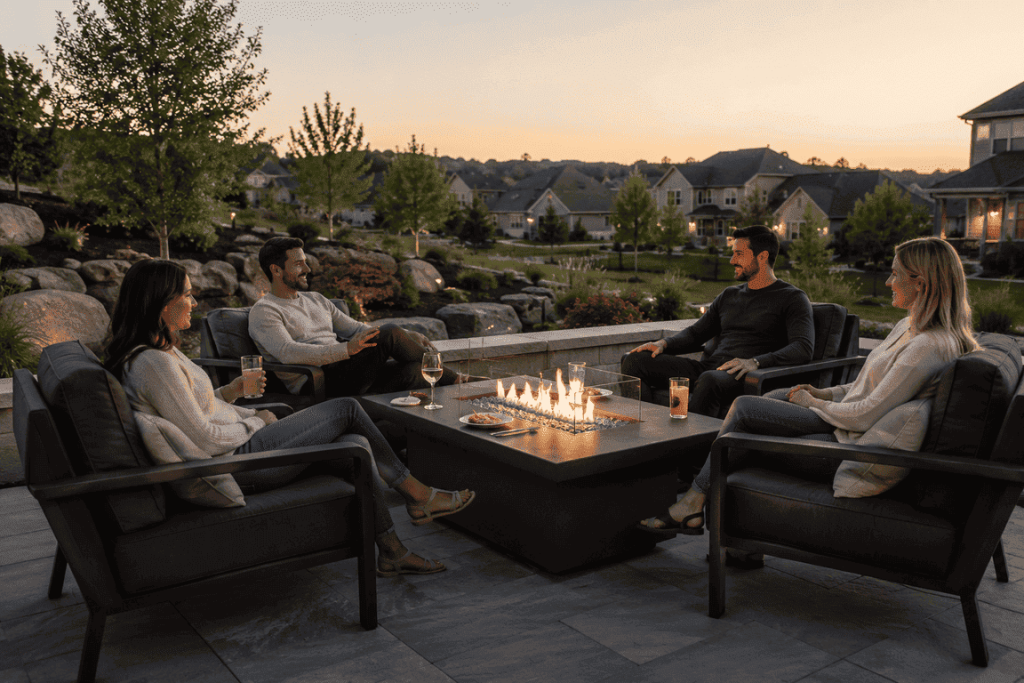
A gas fire table positions the burner at chat height, roughly 24 to 26 inches, with a wide ledge surrounding the flame. The ledge functions as a surface when the fire is off and as a gathering point when it is active.
The low profile is more stable in Brighton’s west winds than a raised bowl design. The propane tank sits inside the base, so no gas line extension is required. That makes a fire table the most accessible option for a yard where the hardscape is already finished and a full built-in would require reopening the existing installation.
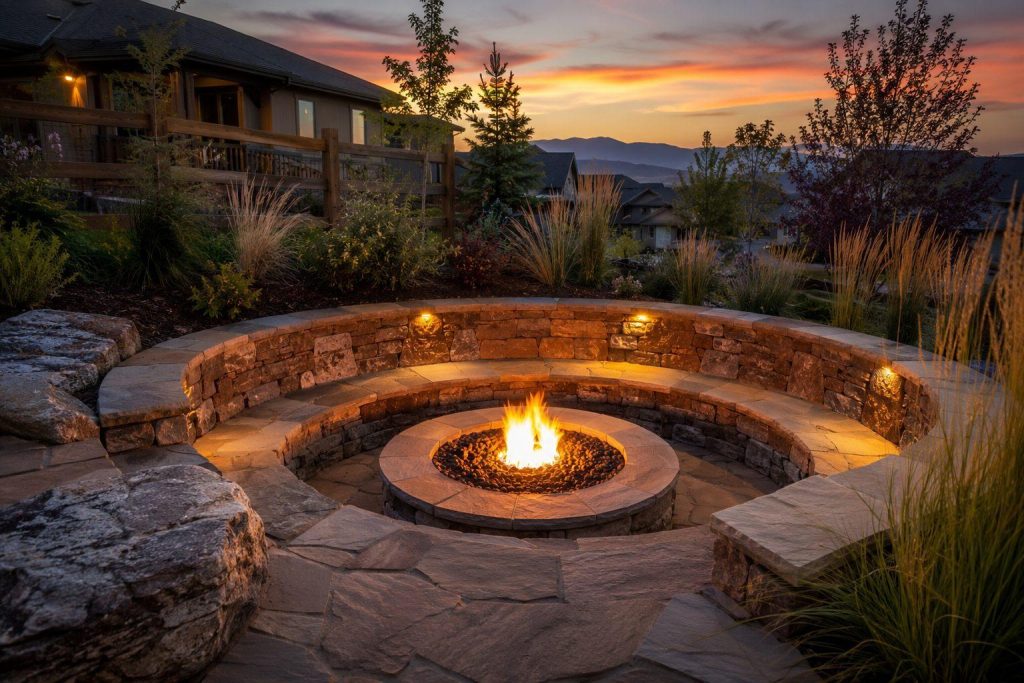
A Sunken Fire Pit Uses Brighton’s Grade Changes to Create a Naturally Sheltered Space
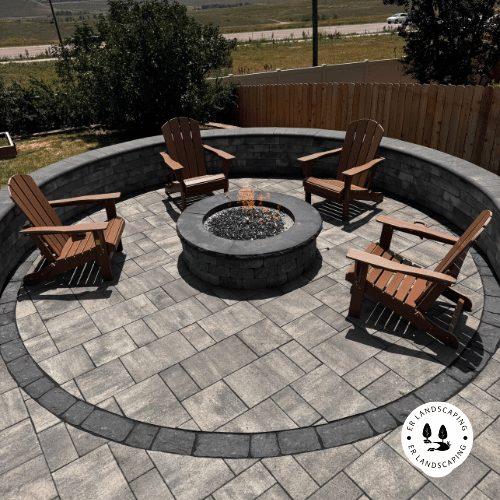
Yards in Brighton with a level change have a natural starting point for a sunken fire pit. Rather than treating the slope as a problem to flatten, the design drops the pit below the patio level and uses the grade transition as wind protection on the exposed side.
Stone seating walls follow the curve of the pit and close in the space. This setup connects directly with grade changes and retaining walls when the project includes earthwork. The sunken pit and the wall system are planned together from the start. Adding one after the other requires regrading work that could have been done once.
Gas vs Wood-Burning in Brighton — What Each Option Requires
Gas offers instant ignition, no smoke, no ash and no restrictions on the days Brighton limits open burning for air quality. HOAs in Brighton’s newer neighborhoods often specify gas explicitly, so checking HOA rules before selecting fuel type is worth doing before calling a contractor.
Wood-burning produces more heat and a campfire experience that gas does not replicate. It requires a refractory fire brick liner rated for extreme temperature cycles. Brighton has burn restriction days tied to Front Range air quality conditions, and wood-burning setups are subject to those restrictions. A propane insert is the middle option: gas operation without a permanent gas line, with more flexibility on placement in the yard.
The fuel type does not change the structural design of a built-in fire pit. It changes the liner specification and whether a gas or propane connection is included in the project.
Gas Fire Pit | Wood-Burning Fire Pit | |
Ignition | Instant — turn of a valve | Manual — kindling and tending |
Smoke | None — air quality compliant | Yes — check Brighton open-burn days |
Maintenance | No ash; annual gas line inspection | Ash cleanup after every use |
Under a pergola | Yes with proper ventilation clearance | Not recommended |
Wind performance | Consistent flame | Affected by Brighton west winds |
Installation req. | Gas line connection required | Refractory fire brick liner required |
The Materials That Hold Up Through Brighton’s Freeze-Thaw Cycles
Every material in a built-in fire pit handles two stress cycles: freeze-thaw from Colorado winters and thermal expansion from the fire itself. The same attention to durability that defines base preparation in Brighton applies to every surface material above it. The products below are specified for both cycles.
- Concrete block with fire brick liner: the standard for built-ins in Brighton. The liner handles interior heat cycles; the block exterior handles freeze-thaw without cracking
- Corten steel: develops a natural patina over time rather than oxidizing unevenly. Holds up through freeze-thaw and extreme heat without degrading
- Natural stone surround: flagstone or fieldstone around the pit perimeter. Durable and visually stable with proper base compaction underneath
- GFRC (Glass Fiber Reinforced Concrete): more resistant than standard concrete and does not crack under extreme thermal cycles
- Avoid: standard brick without a refractory liner, treated lumber in any structural component, standard mortar without a high-temperature additive
What the Installation Involves at ER Landscaping
The installation starts with a site assessment at your property. Daniel evaluates wind orientation, setback distances from structures per code and the connection point with retaining wall and hardscape work if the project is combined. Fire pits in Brighton are positioned away from the prevailing west winds as part of that assessment.
✓ Site assessment — wind orientation, setback distances and fuel type selection |
✓ Excavation and aggregate base compaction |
✓ Structure build with appropriate liner for the fuel type selected |
✓ Gas line coordination with utility contractor (when applicable) |
✓ Integration with patio, retaining wall or outdoor kitchen if multi-element project |
Get a Free Estimate for Your Brighton Fire Pit
ER Landscaping installs built-in fire pits throughout Brighton and Adams County as standalone projects and combined with patio or retaining wall work. 3D rendering for your project is available before construction starts so you see the fire pit in your finished yard before anything is built. We also design and build outdoor kitchen and fire feature combos as integrated projects. Call (720) 299-9876 or request your free consultation online.