


Replacing Rotten Railroad Ties in Brighton: Why Stone Is the Only Permanent Fix for Colorado Yards
If your railroad tie wall in Brighton is rotting, leaning, or soft to the touch, replacement is usually the only long-term solution.
Stone and concrete block work where wood fails because they don’t absorb moisture. In Brighton’s clay soil and freeze-thaw cycles, moisture trapped in wood expands, breaks the structure from the inside, and repeats every winter until the wall gives. Stone sits through those same cycles without changing.
ER Landscaping replaces railroad tie walls across Adams County with concrete block and natural stone systems built to last 20 to 30 years in Colorado conditions.
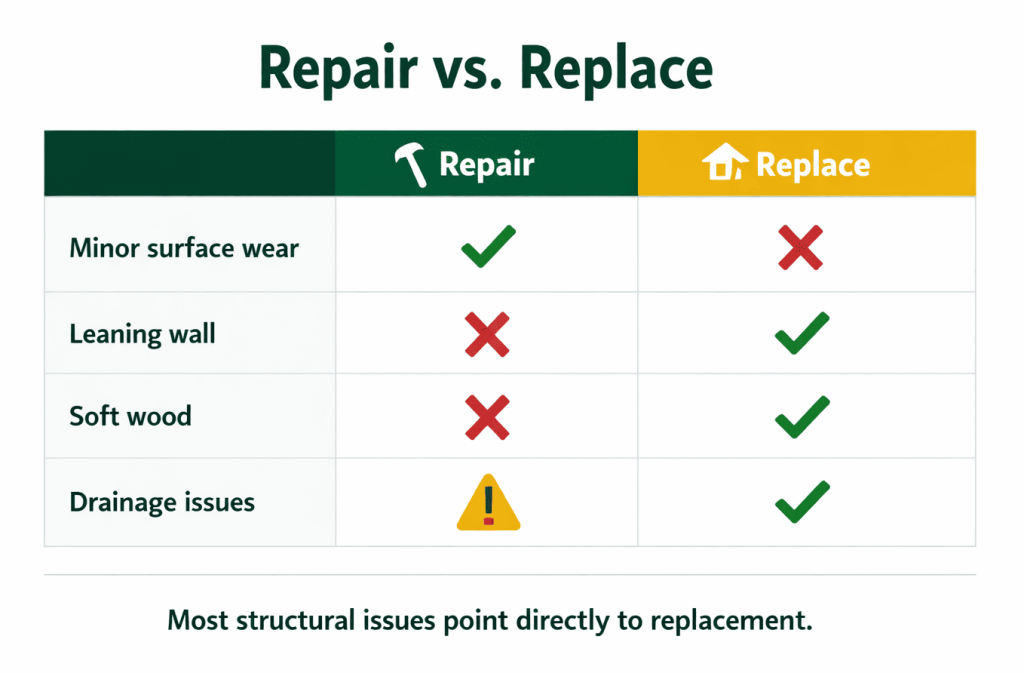
Replacement vs. Repair: How to Read Your Wall
The surface of a railroad tie wall often looks better than the base actually is. These are the two situations and what separates them.
Replace the wall when:
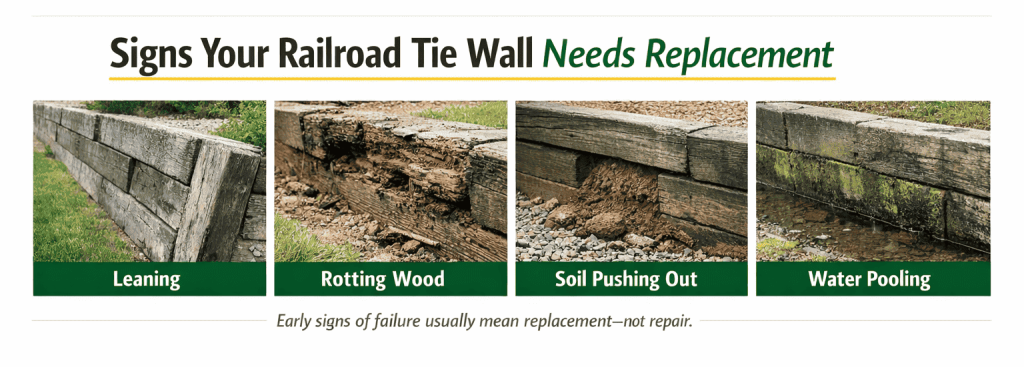
- The wood compresses or crumbles when pressed
- Any section of the wall face has visible lean or bow
- Soil has appeared at the front of the wall that wasn’t there before
- Water pools at the base after rain and stays
- The base has settled unevenly across sections
Monitor and reassess in 6 months when:
- Surface wear is visible but the wall reads straight end to end
- Hairline cracks appear on faces with no displacement
- Drainage at the base is functioning normally
The base is always the deciding factor. A wall that looks rough on the surface but sits perfectly plumb with clean drainage may have years left. A wall that looks fine but has a soft or shifted base is already in failure. ER Landscaping’s free on-site assessment gives Brighton homeowners a clear answer on which situation they’re in, including sections that aren’t visibly failing yet. Water patterns at the base connect directly to the drainage work that often runs alongside replacement.
What Makes Stone Work in Brighton’s Conditions
Concrete block and natural stone stay structurally stable through Brighton’s full range of seasonal conditions. That’s the core reason they work where wood doesn’t.
What stone and block don’t do:
- Absorb water
- Swell or crack from freeze-thaw cycling
- Break down in Brighton’s alkaline clay soil
What they do:
- Handle constant moisture exposure without losing structural integrity
- Allow proper drainage systems to be built directly behind the wall
- Maintain their dimensions year after year regardless of soil conditions
Concrete segmental block is the standard for structural retaining walls. The profiles interlock for added stability and drainage components install cleanly behind it during construction.
Natural flagstone and dry-stack stone are better suited for lower decorative walls where appearance matters as much as function.
The right choice depends on wall height, drainage conditions, and what the yard calls for. ER Landscaping specifies the material at the site assessment based on what’s actually there.
In many Brighton projects, we find walls that look intact on the surface but have already failed at the base from trapped moisture and sustained soil pressure. By the time the face shows movement, the base has usually been compromised for some time.
What the Replacement Process Includes
Replacing a railroad tie wall is not a material swap. Buried anchor sections run horizontally back into the slope and have to come out completely, along with all connecting hardware. Once the existing structure is removed, the soil underneath gets evaluated. Years of wood decay commonly leave soft or displaced areas that need correction before new construction starts.
ER Landscaping handles the full scope on every replacement: removal, soil correction, proper base preparation, drainage installation behind the wall face, and new wall construction from footing to cap. For taller walls or steep slopes, geogrid reinforcement goes into the backfill at set intervals. It’s a mesh layer that distributes the lateral pressure of the retained soil across a wider area, and it’s standard practice for walls over three feet in Brighton.
The hardscaping process is the same for a replacement as for new construction: proper base, proper drainage, and the right materials for Brighton’s climate. The difference is the removal step at the start.
The Foundation Work That Makes the New Wall Last
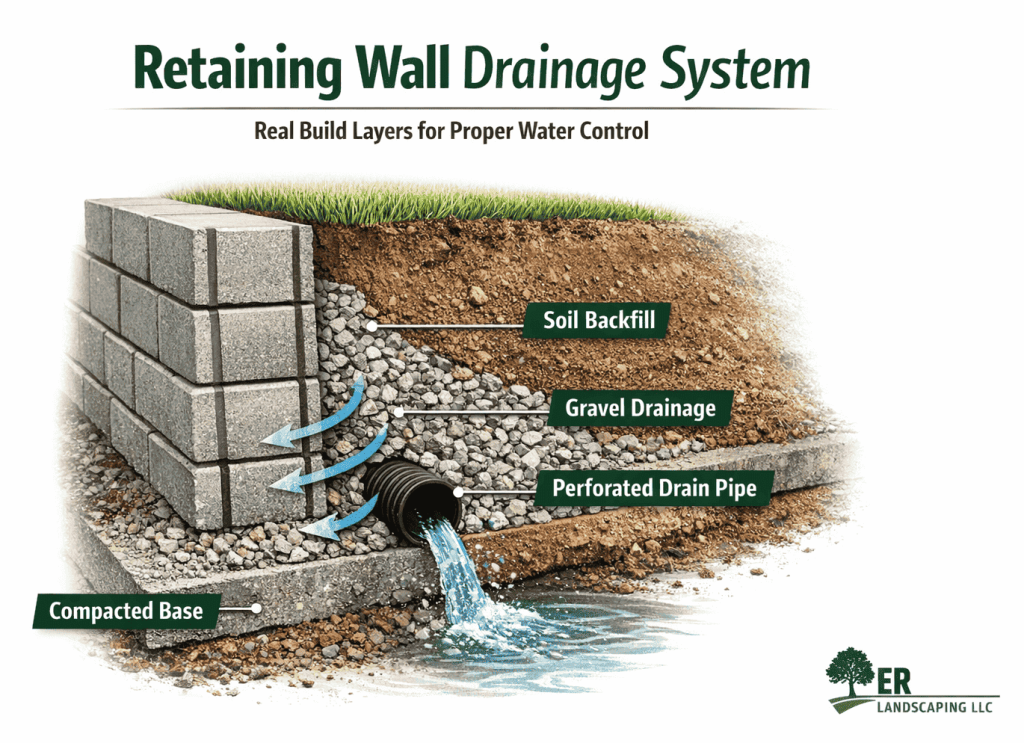
A retaining wall is only as strong as its base. Before the first block goes in, ER Landscaping’s prep work on every replacement includes:
- Regrading and compacting the sub-base to the correct elevation
- Installing drainage aggregate behind the wall face
- Placing a perforated drain pipe at the base of the gravel column
- Routing water to an outlet away from the structure
This base work is what gives the new wall its long-term stability. For many Brighton yards, grading corrections around the wall are part of the same project scope. The soil grading guide covers what that evaluation looks like.
Is Your Wall at the Point Where Replacement Makes Sense?
Once movement or rot starts, the wall does not stabilize on its own. It continues to degrade as moisture and soil pressure build over time.
If the wall shows any of the following, replacement is usually the right move:
- Visible lean or bow
- Soft or deteriorating wood
- Soil pushing out from the front
- Water collecting at the base
At that point, the structure is already failing internally. The assessment confirms the extent, but the direction is typically clear.
ER Landscaping’s free on-site assessment evaluates the full wall, base condition, and drainage setup, and gives you a clear recommendation before any work is scheduled.
Schedule the Assessment Before the Season Fills
If your railroad tie wall is already showing movement or rot, delaying the assessment usually increases the scope of the repair.
Getting it evaluated early gives you more control over timing, cost, and project planning before Brighton’s spring schedule fills up.
Call (720) 299-9876 or visit the retaining wall services page to schedule.
FAQ
Can stone go in over the existing ties without full removal?
No. New material over a failing base takes on the same instability. Full removal is required so the new wall starts on properly prepared, stable ground.
How long does replacement take?
Most residential replacements in the 20-to-40-foot range take two to four days, depending on wall height and drainage scope. A timeline comes with the estimate.
Is a permit required to replace a retaining wall in Brighton?
Generally yes, for walls above a certain height. Brighton’s municipal code sets the threshold. ER Landscaping handles permit coordination when it’s part of the project scope.
Does treated wood perform better in Colorado?
Treated lumber extends lifespan compared to untreated ties, but in Adams County’s combination of alkaline clay soil and repeated freeze-thaw cycling, no wood product performs comparably to stone or concrete block over the long term.