


Winterize Water Features in Brighton, CO: A Simple Checklist Before Freezing Nights
Brighton’s Front Range location means freezing nights typically start mid-October, and even small amounts of trapped water in lines or fittings can damage pumps, basins, and plumbing. If you’ve got a fountain, pond, or bubbling rock feature, winterizing before consistent freezing nights protects your investment from expensive freeze damage.
The winterization process: shut off power + drain all lines + remove and store the pump + clean the basin + cover decorative elements. Depending on your feature type, some steps vary—but the goal stays the same: get water OUT of anything that can freeze.
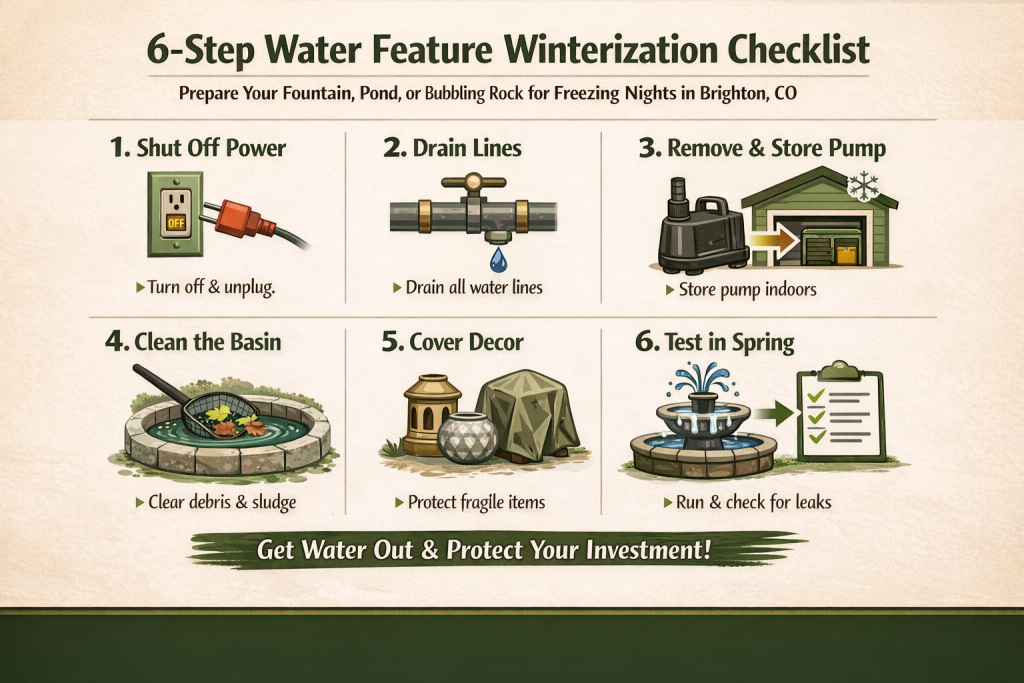
Your 6-Step Winterization Checklist
This works for most backyard water features in Brighton—fountains, ponds, bubbling rocks. Feature-specific notes come after, but start here.
Step 1: Shut off power and disconnect
Turn off the feature at the power source (GFCI outlet or dedicated circuit). If your pump plugs into an outdoor outlet, unplug it. If it’s hardwired, switch off the breaker and label it so nobody turns it back on during winter.
Step 2: Drain all supply lines
If your feature has plumbing that feeds water to the fountain head or spitter, drain it completely. Open drain valves if installed (small valves at low points), or disconnect fittings at the lowest point to let water out. Trapped water in a supply line will freeze, expand, and crack the pipe or fitting. Even a small amount causes problems.
Step 3: Remove the pump and store indoors
Pull the pump out of the basin or pond. Rinse it with clean water to remove debris and algae. Let it dry, then store it somewhere that won’t freeze—garage, basement, shed with heat. Submersible pumps left in standing water can freeze internally and split the housing or impeller. The reason you need to store pumps in a heated space is that even dry pumps can have moisture trapped inside that freezes and causes damage.
Some contractors recommend storing pumps in a bucket of water to keep seals from drying out. If you do this, make sure the storage area stays above freezing all winter.
Step 4: Clean the basin
Remove leaves, debris, and sludge from the bottom of the basin (the container that holds water for your feature) or pond. This prevents decomposition issues over winter and makes spring startup easier. If you’re draining a pond completely, now’s the time. If you’re leaving water in a pond for fish or plants, reduce the water level below any plumbing connections.
Step 5: Cover or store decorative elements
Ceramic, terra cotta, or natural stone elements can break if they absorb water and freeze. Either bring them indoors or cover them with weatherproof material. Metal and resin elements usually handle cold fine, but covering keeps them cleaner for spring.
Step 6: Spring startup test
When you reinstall in spring, run the system for 10-15 minutes before adding decorative elements back. Check for leaks, listen for unusual pump noise, and confirm water flow is normal. This catches any freeze damage before you refill everything.
When to Winterize in Brighton
In Brighton, Front Range average first frost hits around mid-October, so the practical rule is to winterize before consistent freezing nights start. You don’t need to rush the first time overnight temps dip to 32°F, but once nighttime lows stay near or below freezing for multiple nights in a row, the risk of damage increases significantly.
Don’t leave it too long. If a hard freeze hits before you’ve drained lines, the damage could already be done—and it may not be reversible. Even a small pocket of water in a fitting can split when it freezes and expands.
Some homeowners winterize in late September to avoid the rush. If you’re traveling or won’t be around in mid-October, earlier is safer than later.
What if you want to run your feature into late fall?
Some features can run longer if you monitor temperatures closely. As long as water keeps circulating and doesn’t sit stagnant overnight, the movement can prevent freezing in milder cold snaps. But once nighttime temps consistently drop into the 20s, even running water won’t save exposed plumbing or shallow basins.
If you choose to run late, have a plan to winterize quickly when the forecast shows sustained freezing nights.
Feature-Specific Notes
Ponds with fish or plants
Don’t drain completely if you’re overwintering fish or aquatic plants. Reduce water level to below any plumbing connections, remove the pump, and stop feeding fish once water temps drop below 50°F. Consider a pond heater or aerator to keep a small hole in ice for gas exchange.
Basin fountains (urn, tiered, wall-mount)
These usually have a recirculating pump in a buried basin. If the basin doesn’t have a drain valve, use a pump or siphon to empty it completely. The basin can split if it freezes solid with water inside.
Bubbling rocks and disappearing fountains
Same principle as basin fountains. The rock itself handles freeze-thaw fine, but the basin and plumbing underneath need to be empty.
Features with built-in winterization systems
Some professionally installed features include low-point drains, pump vaults, or plumbing designed to drain completely when you open a valve. If your feature was part of our Brighton installations, check if it has a winterization valve or drain—it makes the process much faster.
What Happens If You Don’t Winterize
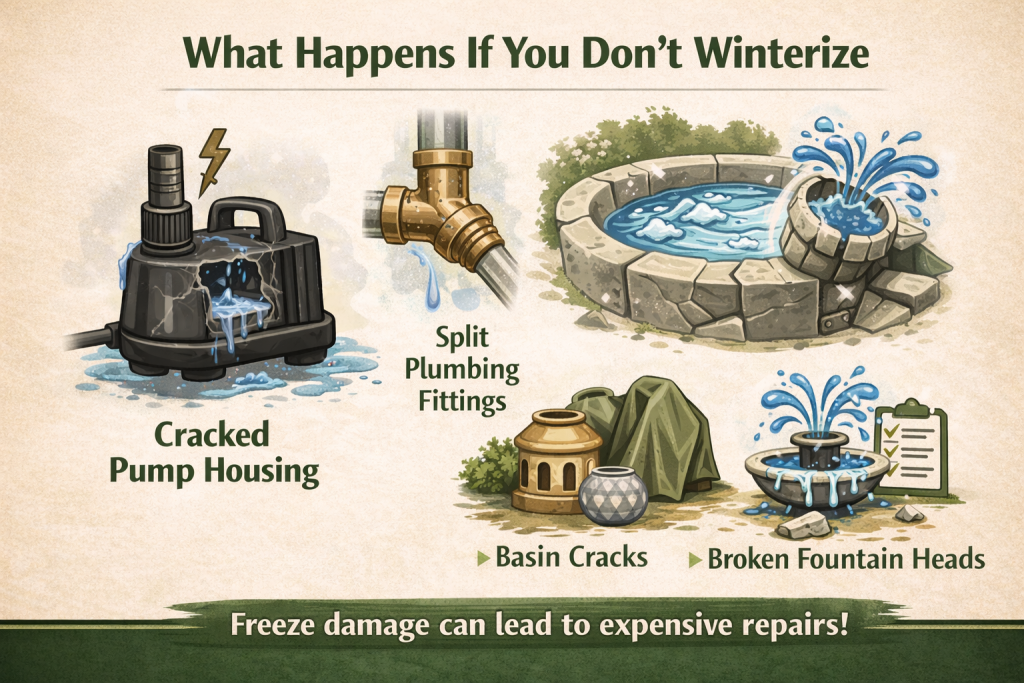
Freeze damage doesn’t always show up immediately. Sometimes a cracked pump housing or split fitting leaks slowly in spring, and you don’t notice until the water level drops or the pump stops working. From our work across Brighton, we see the same patterns every season.
Common freeze damage:
- Cracked pump housings → Pump runs but leaks, or doesn’t run at all because internal components froze and expanded
- Split plumbing fittings → Small cracks at elbows, tees, or valve connections that leak when you refill
- Basin cracks → Concrete, fiberglass, or resin basins can split if water freezes inside and expands against the walls
- Broken fountain heads or spitters → Ceramic or stone elements that absorbed water and cracked during freeze-thaw cycles
Repairing or replacing a cracked pump can run $150-$400 depending on size. Replacing a cracked basin or replumbing a feature costs more. Winterizing takes 30-60 minutes and prevents all of this.
How ER Landscaping Designs Water Features for Winter
When ER Landscaping installs water features in Brighton, winterization is part of the design from day one. After years of winterizing water features across Brighton’s Front Range climate, we know what freezes, what cracks, and what design details make the difference. Low-point drains (valves at the lowest part of the system) let you empty lines without disconnecting fittings. Pump vaults (access boxes) provide easy reach to the pump. Plumbing layouts prevent water from getting trapped in high spots. If you’re planning a new feature or upgrading an existing one, mentioning easy winterization during design saves time every fall and reduces freeze damage risk.

We also handle professional winterization for clients who prefer not to do it themselves—draining, pump removal and storage, basin cleaning, and spring reinstall with a system check. This protects your investment and ensures your feature starts up properly when warm weather returns.
Don’t wait until freeze damage happens. Contact us today for a free consultation and make sure your fountain or pond is completely protected before the first hard freeze hits.