


Pavers Lifting After Winter in Brighton, CO? Stop Re-Leveling Every Spring
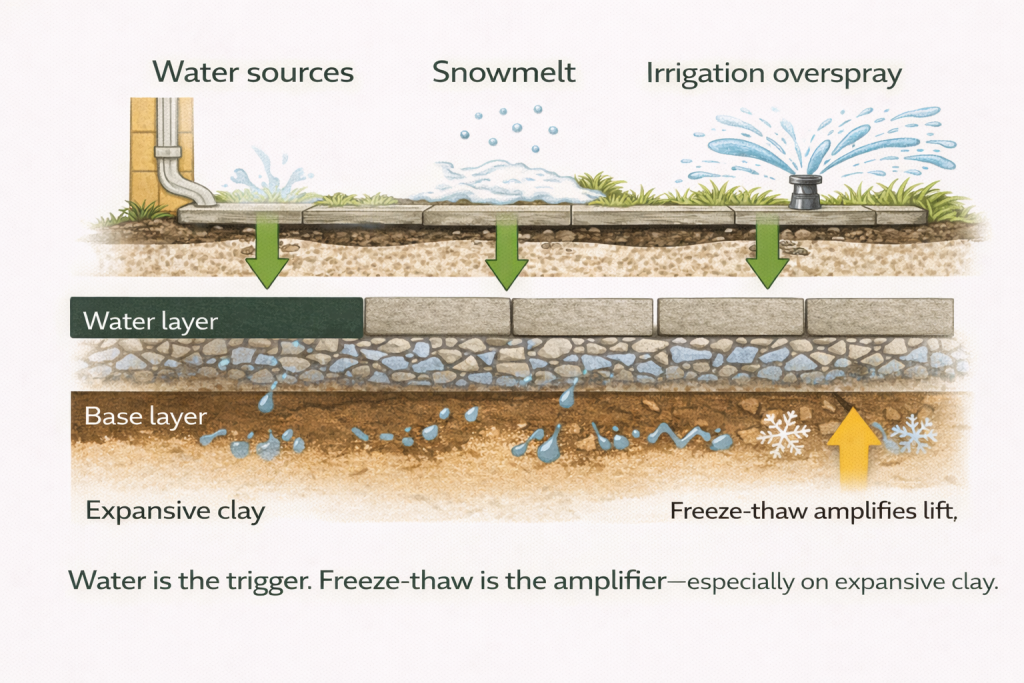
If you’re paying to re-level the same pavers every spring, you’re treating the symptom—not solving the problem. Brighton sits on Front Range clay soils that swell when they get wet. When water from rain, snowmelt, downspouts, or irrigation reaches the clay under your pavers, the soil expands and pushes upward. Add freeze-thaw cycles in winter, and the pattern repeats: lift, re-level, lift again.
The fix that stops repeat lifting: control the water path + rebuild the base for expansive clay + give water out.
What that means:
- Redirect water sources away from the paver area
- Rebuild base for Brighton clay soils (deeper compacted base than standard installs)
- Install drainage so water moves OUT before reaching expansive soil
If water keeps reaching the subgrade, pavers will keep moving—no matter how many times you re-level.
The Fix That Stops Repeat Lifting
When ER Landscaping addresses repeat paver lifting in Brighton, the approach starts with water sources—not the pavers themselves. Without controlling water, any base rebuild will eventually fail because the water finds its way in, reaches the clay soil, and the cycle continues.
The three-part fix:
- Drainage first → Extend downspouts away from paver areas (as far as practical—enough to keep discharge away from the patio base), regrade low spots that collect runoff, adjust irrigation heads to eliminate overspray onto paver edges
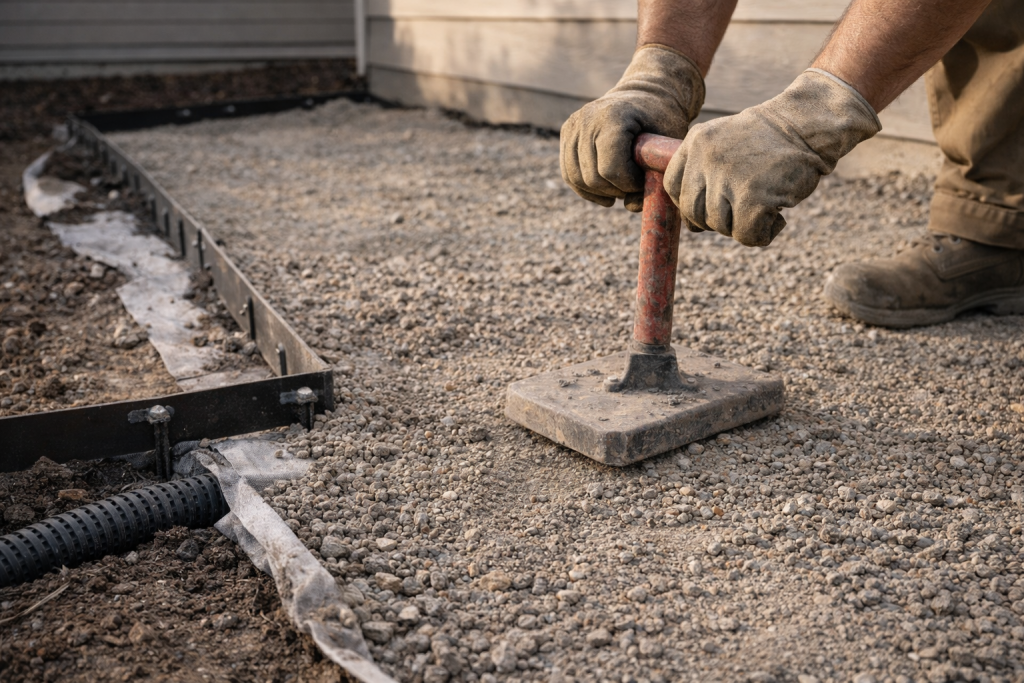
- Proper base for local soil → Excavate deeper than standard installs, install compacted aggregate base in lifts (not all at once), create proper slope for surface drainage, add perforated drain pipe at low points if needed
- Edge restraint that handles freeze-thaw → Metal or concrete edge restraint (plastic edging can heave or deform over freeze-thaw cycles, especially if the base stays wet), proper joint spacing, bedding sand for final leveling
The difference between a fix that lasts one year and a fix that lasts through multiple freeze-thaw seasons is whether the base and drainage are designed for Brighton’s specific soil conditions—not just generic paver installation specs.
Where Water Gets In (And Why It Matters)
If your pavers keep lifting in the same spots, water is getting to the clay soil underneath. The source isn’t always obvious, but it’s usually one of these.
Downspouts dumping near the patio
If downspouts discharge close to your paver area, rainwater and snowmelt are saturating the soil next to (and sometimes under) your pavers. Clay soils don’t drain quickly, so the water sits and the clay swells. Extending downspouts is the single most common fix for pavers that lift in the same spots every year.
Low spots that collect water
Paver installs in a low area of the yard naturally collect runoff. Even with proper slope on the paver surface, if the surrounding grade directs water toward the patio, the water finds its way into the base layer and reaches the clay soil below. Regrading the surrounding area solves this.
Irrigation overspray
Sprinkler zones that hit the edges of your paver area add moisture to the soil underneath. During Brighton’s May 1-Sept 30 watering season, that’s consistent water exposure to clay soils. Adjusting sprinkler heads or redesigning zones eliminates this source.
No drainage path
If there’s no slope or drainage outlet for water that does get into the base layer, it sits there. A proper paver install includes slope (rule of thumb: ~2% slope away from structures) and sometimes perforated drain pipe at low points to move water out before it reaches clay soil.
Why Re-Leveling Alone Doesn’t Work
Re-leveling resets the surface, but it doesn’t stop water from reaching the clay soil underneath. The Colorado Geological Survey notes that expansive (swelling) soils are a major cause of structural and pavement damage, and nationally the losses are estimated in the billions—often exceeding the combined damage of other major natural hazards.
When water reaches the clay under your pavers, the soil swells—and winter freeze-thaw amplifies the movement as trapped moisture freezes and expands.
If the same areas lift every year, water is reaching that spot consistently. Re-leveling doesn’t eliminate the water source—it just buys time until the next cycle.
What not to do:
- Don’t keep “topping up” bedding sand or joint sand to hide movement. If water is still getting under the patio, the base will keep shifting.
- Don’t re-level without checking downspouts and irrigation first—otherwise you’re paying for a reset that won’t last.
- Don’t change grade near the foundation without a plan for drainage (you can create new water problems fast).
Re-Level vs Rebuild: When Each Makes Sense
Not every lifted paver needs a complete rebuild, but if you’re dealing with the same issues year after year, re-leveling is just buying time. Here’s how to evaluate what your paver patio situation actually needs:
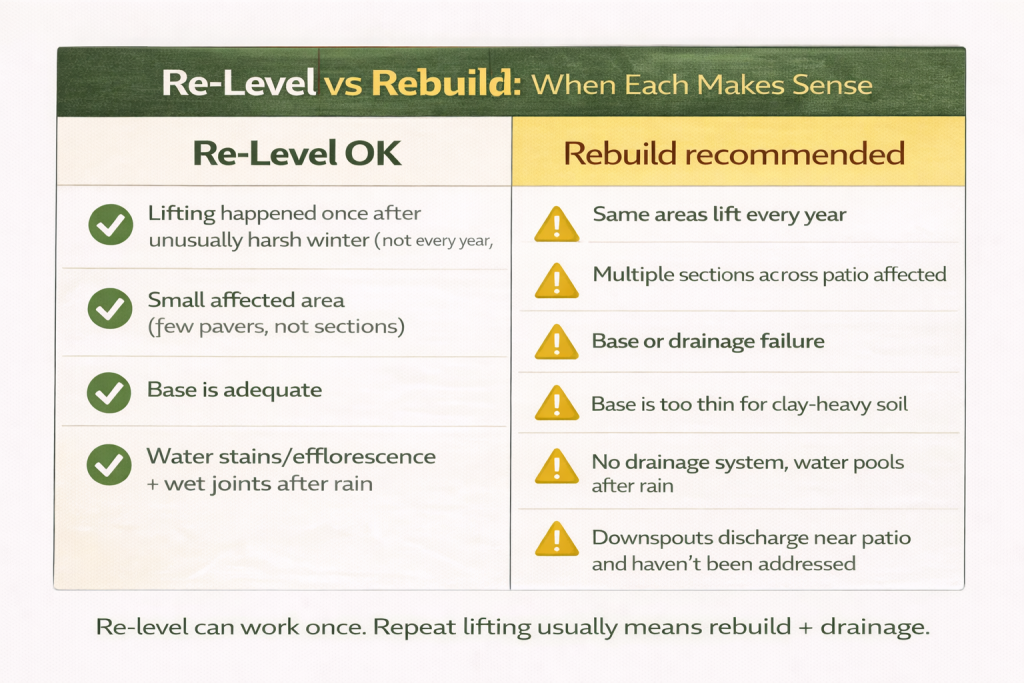
If you answered “rebuild” for multiple situations, re-leveling is just delaying the inevitable. The base and drainage need to be redesigned for Brighton’s soil and climate.
Quick Diagnosis: Water Problem or Base Problem?
Before deciding between re-level or rebuild, figure out what’s actually causing the movement. Answer these to narrow down the source:
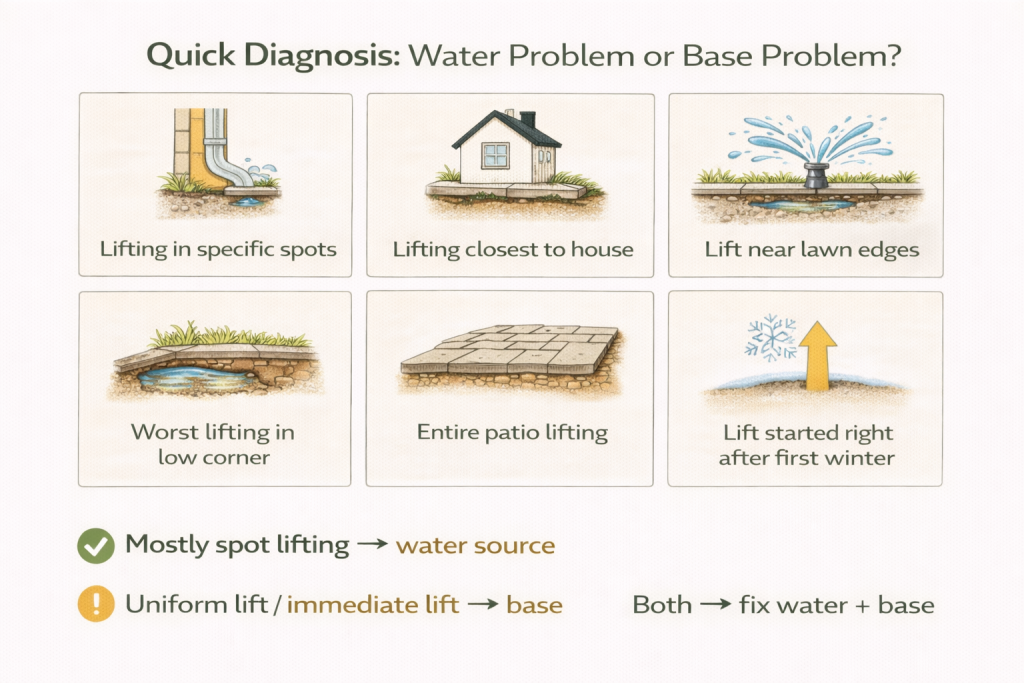
If you checked mostly “specific spot” items = water problem. If you checked “entire patio” or “started immediately” = base problem. Multiple checks in both categories = you need to address water AND base.
How ER Landscaping Approaches Paver Fixes in Brighton
ER Landscaping doesn’t just re-level pavers and hope they stay put. When we address repeat lifting in Brighton, we start by diagnosing water sources—downspouts discharging too close, irrigation overspray hitting edges, low spots collecting runoff. If the water problem isn’t fixed, no base rebuild will last.
We also evaluate whether the existing base was ever adequate for Brighton’s clay soils in the first place. Many older paver patios were installed with bases that work fine in well-draining soils but can’t handle Front Range freeze-thaw cycles and expansive clay. When we rebuild, the base depth and drainage design account for local conditions—not just manufacturer specs written for different climates.
If you’re tired of paying to fix the same areas every spring, we can evaluate what’s actually causing the movement and whether a proper fix makes sense for your situation.