


Brighton, CO Sprinkler System Keeps Breaking After Winter? Causes + Fixes That Stop Repeat Repairs
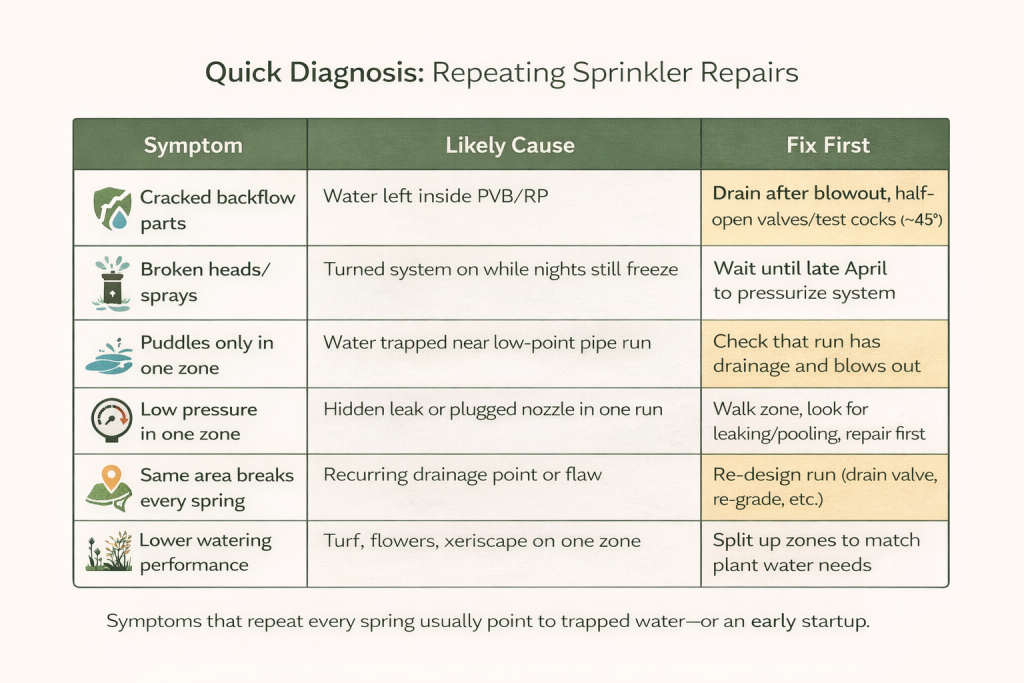
The most common reason Brighton sprinkler systems break every spring is incomplete winterization—especially around the backflow assembly and any low points that hold water. Draining the backflow helps, but repeat spring repairs usually mean water was left somewhere in the lines or valves, which then freezes and cracks parts over winter.
Beyond backflow issues, repeat repairs trace back to water trapped in low points, turning the system on too early in spring, or zone layouts that don’t account for Brighton’s seasonal watering restrictions (May 1-Sept 30).
Quick causes + fixes:
- Cracked backflow parts (PVB/RP) → Drain the backflow correctly and leave shutoffs/test cocks in a half-open (45°) position after winterization
- Broken heads at startup → You turned it on while nights still dip near freezing (common in late spring here)
- Leaks / low pressure in the same zone → That run has a low point or poor drainage and isn’t clearing out during winterization
The fix-first approach: proper fall shutdown, careful spring startup timing, and zone-by-zone testing before you commit to full-season watering.
The Brighton Backflow Drain Process (Most Homeowners Skip This)
Brighton homeowners get repeat spring repairs because the irrigation backflow device wasn’t drained correctly before winter. This is one of the most preventable (and most expensive) spring failure points.
If your backflow cracks every year, don’t just replace it—assume trapped water + valve position issue.
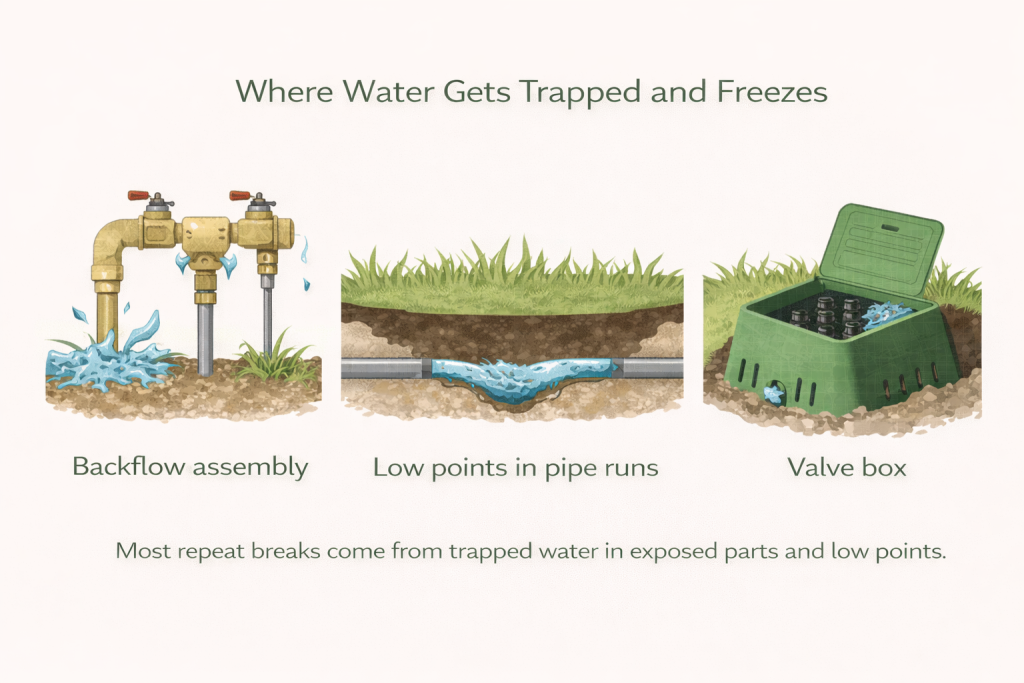
Backflow devices fail because they trap water in chambers above ground. In Brighton, that water freezes and cracks fittings or damages internals.
What actually prevents repeat failures:
- Shut off the irrigation supply at the proper shutoff (often basement/crawlspace or a stop-and-waste valve)
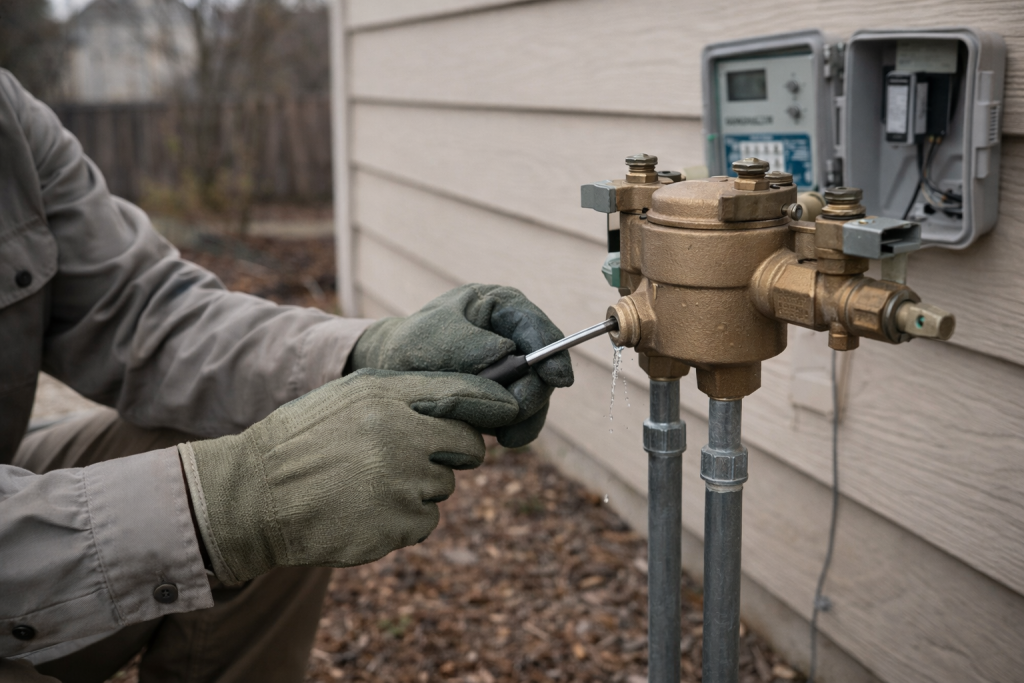
- After the system is winterized, drain the backflow device (steps vary by PVB vs RP)
- Leave the backflow shutoffs and test cocks half-open (about 45°) for winter—fully open/fully closed can trap water and split components
Important: The reliable way to protect the underground lines and valves is a proper blowout of the irrigation system—drain valves alone aren’t dependable in freeze-thaw climates.
Do not blow out a PVB or RP backflow device with compressed air—the blowout should be done downstream, not through the backflow assembly.
Other Common Spring Failures (And What Causes Them)
Beyond backflow issues, Brighton sprinkler systems fail in spring for predictable reasons tied to startup timing and trapped water.
Broken sprinkler heads
Turning the system on too early—before nighttime temps stay consistently above freezing—can crack heads that still have residual water or ice in them. Late April to early May is the safer window in Brighton, depending on weather. Rushing spring startup to “get the lawn green early” often creates the repairs you’re trying to avoid.
Leaks and low pressure in specific zones
Water trapped in low points of the system (areas where pipes dip below grade or don’t have proper drain valves) freezes and cracks pipes. This shows up as puddles in the yard or zones that won’t pressurize when you turn the system back on. If it’s the same zone every year, that section has a drainage issue.
Zone layout problems
If your zones mix turf, thirsty foundation beds, and low-water plants, you’ll end up overrunning zones to keep one area alive—then you risk runoff and you stress the system. In Brighton, your controller should be programmed around the city’s May 1–Sept 30 schedule (3 days/week + no watering 10 a.m.–6 p.m.). Poorly designed zones create both watering compliance issues and system stress.
On Brighton installs, the repeat pattern is almost always the same: trapped water + early startup + one zone that never drains. When we diagnose these, we look for repeat-zone leaks, low points without proper drainage, and backflow assemblies left fully open/closed instead of winter position.
Brighton Spring Startup Checklist (Fix-First Approach)
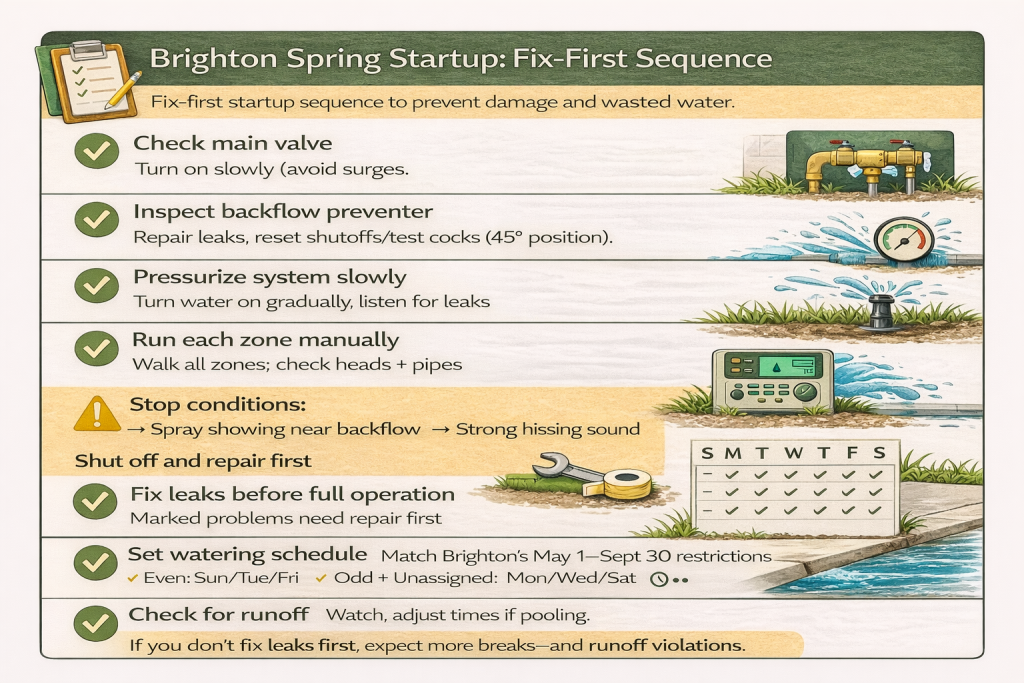
Before you turn your system back on in spring, follow this sequence to catch problems early and avoid damage:
Step 1: Check main valve
Locate the sprinkler main valve (usually in a green box near your water meter). Turn it on slowly—not all at once—to avoid pressure surges that can crack weakened fittings.
Step 2: Inspect backflow preventer
Look for cracks in brass fittings or signs of leaking. If the device looks damaged, don’t proceed—have it repaired first. Return the shutoffs and test cocks from their winter position (45°) to normal operating position.
Step 3: Pressurize system slowly
Turn water on gradually (avoid water hammer). Listen for hissing or unusual sounds that indicate leaks.
Stop conditions: If you see spray at the backflow, strong hissing, or immediate puddling → shut off and repair before programming the system.
Step 4: Run each zone manually (zone walk)
Activate one zone at a time from your controller. Walk the zone and check for:
- Broken or missing sprinkler heads
- Leaks or puddles (indicates cracked pipes)
- Uneven coverage or zones that won’t pressurize
Step 5: Fix leaks before full operation
Mark any problem spots and repair them before you set the system to automatic. Running a leaking system wastes water and can lead to runoff violations.
Step 6: Set watering schedule
Program your controller to match Brighton’s May 1–Sept 30 watering restrictions:
- Even addresses: Sunday, Tuesday, Friday
- Odd + Unassigned: Monday, Wednesday, Saturday
- No watering 10 a.m.–6 p.m.
- No runoff or pooling allowed
Step 7: Check for runoff
During the first few automatic cycles, watch for water pooling in gutters or streets. Adjust zone run times if needed.
When the System Needs More Than a Spring Fix
If you’re dealing with repeat failures every year—same zones breaking, backflow device cracking despite proper draining, or multiple leaks across the system—that points to design issues or a system that’s reached the end of its viable lifespan.
ER Landscaping installs and maintains sprinkler systems in Brighton, including repair and winterization services. We diagnose failure points and set systems up to run efficiently under local conditions—zone layouts that match plant water needs, backflow devices that can be effectively drained, and schedules that stay within Brighton’s watering restrictions.
For systems that keep failing, we evaluate whether the layout allows for proper winterization in the first place. Older systems sometimes lack drain valves at low points or have backflow preventers in locations that can’t be protected during freezes. Redesigning those sections eliminates recurring problems rather than managing them every spring.
We also handle fall winterization (proper shutdown + backflow drain) and spring startup inspections to catch damage before it turns into expensive repairs.