


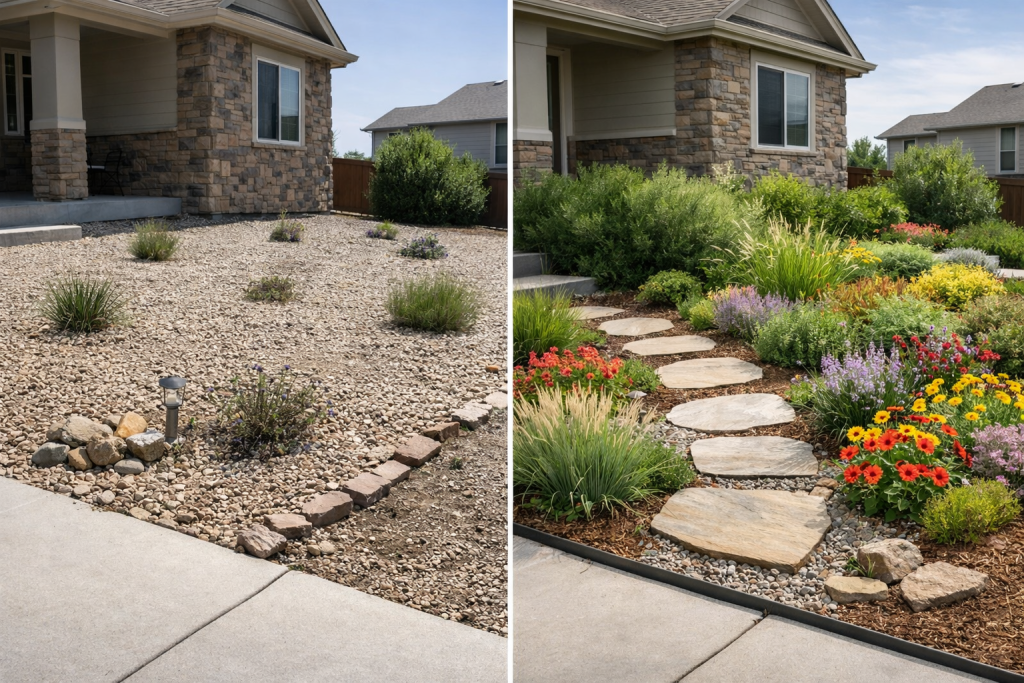
Brighton Xeriscape for Beginners: How to Avoid the “Rock Yard” Look (Wind, Sun & Watering Rules)
A Brighton xeriscape doesn’t have to look like a gravel parking lot. When done right, it’s a layered, colorful yard that uses less water, survives Front Range winds, and works within Brighton’s seasonal watering restrictions—without the harsh “rock garden” look that makes most homeowners hesitate.
The difference between a finished-looking Brighton xeriscape and a “rock yard” comes down to three things: clear plant layering, a smart rock-to-plant balance, and a plan that matches Brighton’s wind, sun, and watering rules. Get those right, and your yard looks intentional—not like you stopped halfway.
Quick rules to avoid the “rock yard” look (Brighton edition):
- Build in 3 plant layers (shrubs → grasses → perennials/groundcover)
- Keep rock as an accent, not the main event (use it for paths + small pockets)
- Choose plants that can take Front Range wind + full sun, then water deep, not daily
Why Brighton Yards Turn Into “Rock Gardens” (And How to Avoid It)
Most Brighton xeriscapes fail because homeowners see “drought-tolerant” and assume it means replacing grass with gravel and a few scattered plants. What you get is a yard that looks abandoned, not low-maintenance.
Brighton’s semi-arid climate, clay soil, and Front Range winds create challenges rock alone can’t solve. Without plant structure, your xeriscape ends up harsh and one-dimensional—no seasonal interest, no wind buffer, no shade for smaller plants.
From installs across Brighton, the pattern is consistent: too much rock, not enough plant layering, and no establishment plan that fits the city watering schedule. Fix those three, and xeriscape stops looking harsh and starts looking finished.
The 3-Layer Design That Actually Looks Finished
A proper xeriscape has structure. Think of it as three layers: backbone shrubs in back, ornamental grasses in the middle, and flowering perennials or groundcovers in front. This layering creates depth, blocks wind for smaller plants, and gives your yard visual interest year-round.
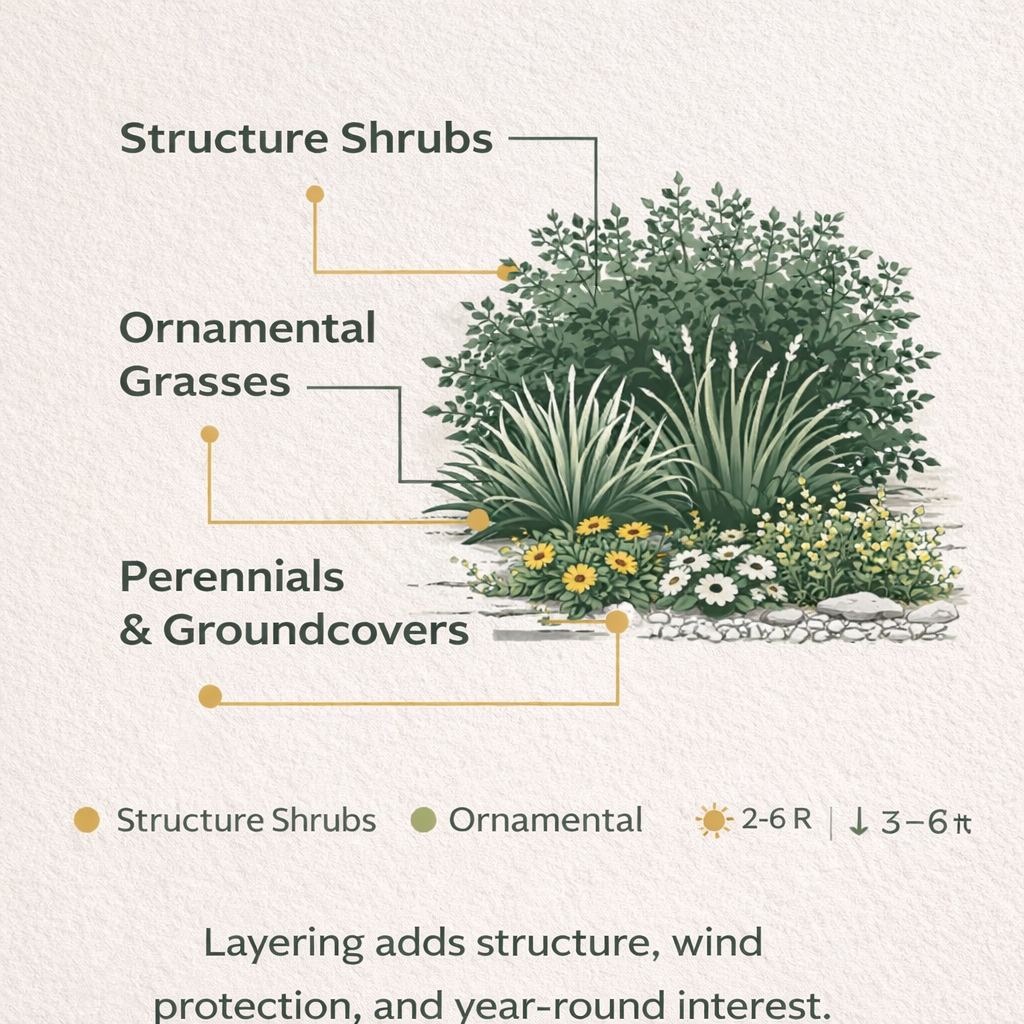
Layer 1: Structure Shrubs (Back)
These are your workhorses—plants like Apache Plume, Blue Mist Spirea, or Fernbush that provide height, form, and wind protection. They anchor the design and give the yard a “finished” look even in winter when perennials die back.
Layer 2: Ornamental Grasses (Middle)
Grasses like Blue Avena, Little Bluestem, or Prairie Dropseed add movement and soften the transition between shrubs and groundcovers. They’re drought-tolerant once established and handle Brighton’s wind without flopping over.
Layer 3: Perennials & Groundcovers (Front)
This is where you get seasonal color—Blanket Flower, Rocky Mountain Penstemon, Ice Plant, or Prairie Winecups. These fill in gaps, provide bursts of bloom, and keep the yard from looking static.
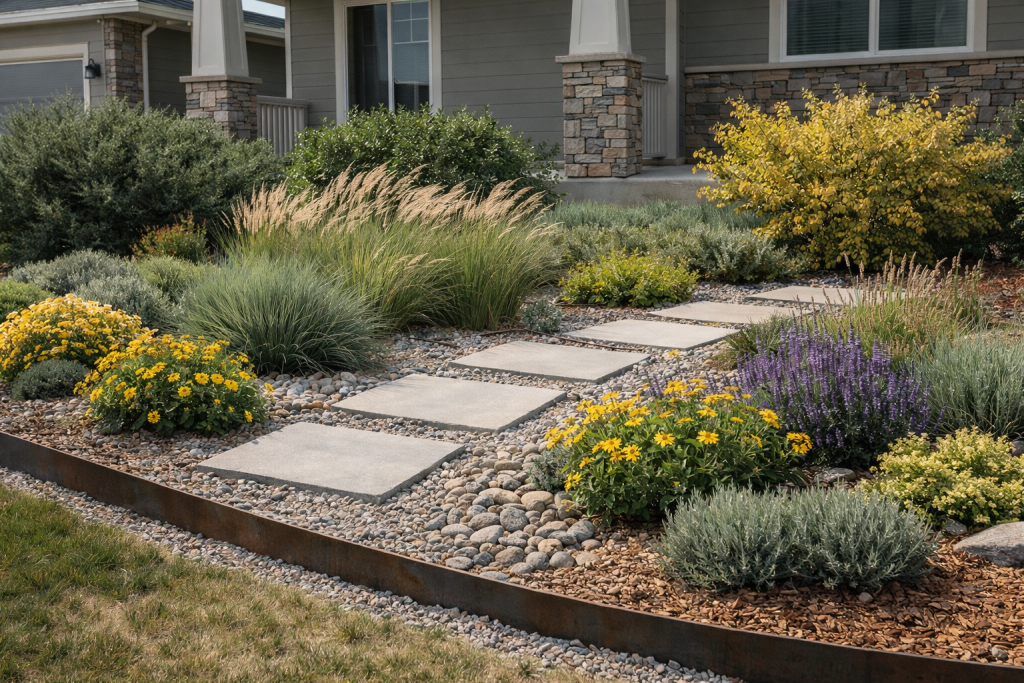
Rock and mulch play supporting roles, not starring ones. Use decomposed granite or pea gravel for pathways and as accent material between plant zones, but not as the dominant feature. If you’re planning more structured pathways or outdoor living areas, paver installation can define space without overwhelming the plantings. Organic mulch around plant bases helps retain moisture and keeps soil temperatures stable during freeze-thaw cycles.
A simple rock-to-plant balance that looks “designed” (not empty):
- Rule of thumb: aim for more planted area than rock—rock should read as paths, borders, or small “negative space,” not the whole yard
- Use defined edges (steel edging, bender board, or stone) so rock zones look intentional
- Plant in groups of 3–7 and repeat them across the yard (repetition = “finished” fast)
Plant Choices That Survive Brighton’s Wind and Sun
Brighton sits in full sun with little natural windbreak. Your plant palette needs to handle both. Native and Colorado-adapted plants are your best bet—they’ve evolved for alkaline soil, low rainfall, and temperature swings that can hit 40°F in a single day.
Here’s a simplified plant palette for a Brighton xeriscape that layers well:
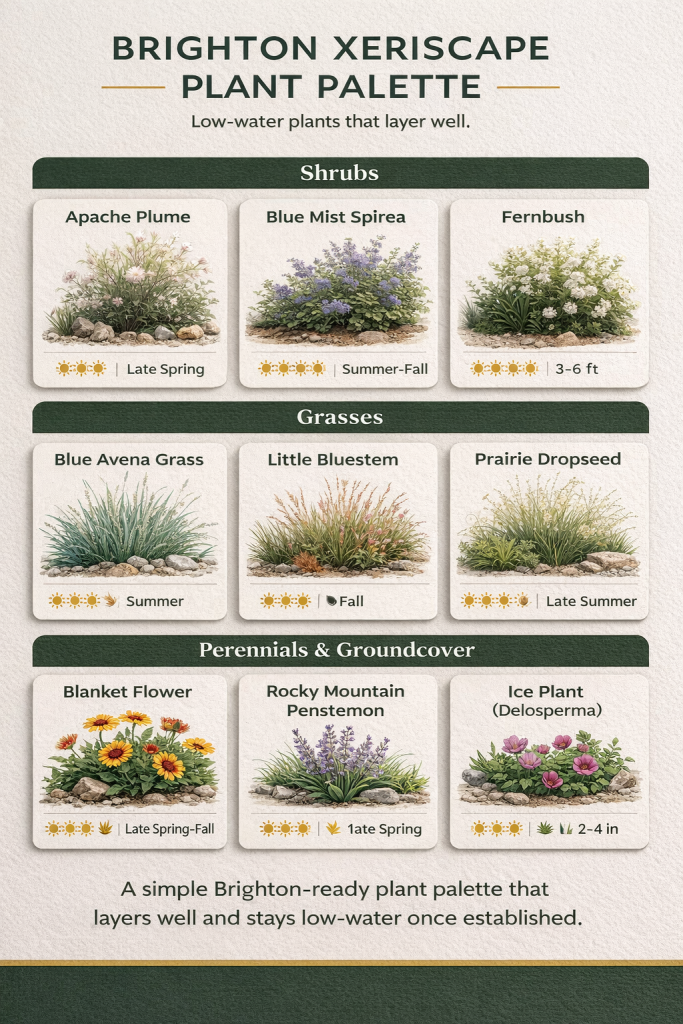
These plants establish roots before the heat hits if planted in spring (after last frost, typically mid-May) or in fall (September-early October). Once established, they need deep watering once every 7-14 days rather than frequent shallow watering.
Avoid plants that need frequent watering or consistent afternoon shade to look good in full-sun, windy Brighton. Kentucky bluegrass lawns and many thirsty ornamentals can work—but they usually require more water, more maintenance, and more adjustments than a true low-water xeriscape. If you’re unsure about your yard’s sun exposure or drainage, a site assessment helps match plants to your specific microclimate.
Watering Rules That Won’t Get You in Trouble
Brighton’s seasonal watering rules (May 1-Sept 30): even addresses water Sun/Tue/Fri; odd addresses Mon/Wed/Sat; no Thursdays, no watering 10 a.m.-6 p.m., no runoff.
The challenge with these restrictions is establishment watering—native plants need consistent moisture for the first 6–8 weeks to build deep roots, but you’re limited to three days per week. The solution is watering deep, not frequent.
Weeks 1–4: Water deeply on your three assigned days (early morning 6–8 a.m.). Focus on the root zone—not the whole yard.
Weeks 5–8: Keep deep watering, but watch growth and adjust based on heat/wind exposure.
After week 8: Drop to once per week or every 10 days depending on heat and rainfall.
Fall installs usually need less supplemental watering thanks to cooler temps and natural precipitation.
When to Call Professional Help
DIY xeriscape works for small areas if you understand soil prep, drainage, and plant spacing. But most Brighton homeowners underestimate three things: excavation depth for proper drainage, the amount of base material needed under pathways, and how to slope the yard away from the foundation.
If your yard has poor drainage, sits on heavy clay, or shows signs of settling near the house, professional site assessment is worth it. We’ve stepped in to fix xeriscapes where drainage wasn’t addressed and plants failed within one season despite being “drought-tolerant.”
A well-installed xeriscape pays off in lower water bills, less maintenance, and a yard that looks intentional year-round. ER Landscaping designs and installs xeriscapes with native Colorado plants that handle Brighton’s conditions from day one—if you’re ready to move past the rock pile look, we build layouts that work with the climate, not against it.