


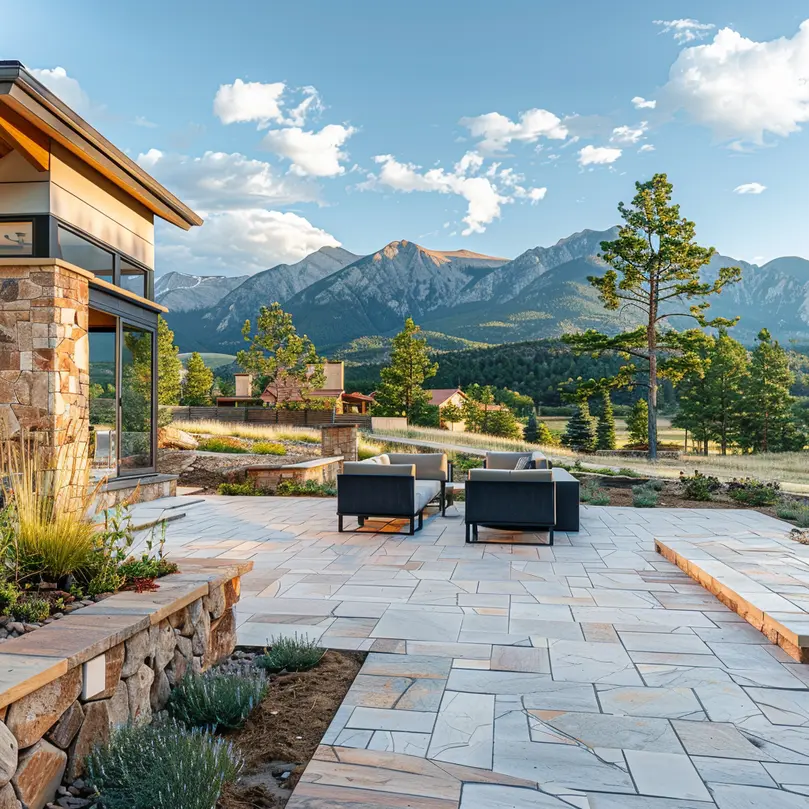
Paver Installation vs. Concrete: Which is Best for Your Yard?
Choosing between pavers and concrete represents one of the most important decisions for outdoor hardscaping projects. Pavers provide superior design flexibility and easier repairs, while concrete offers lower initial costs and faster installation.
This comprehensive comparison examines both options across critical factors including durability, aesthetics, costs, and maintenance requirements. Understanding these differences helps Colorado homeowners make informed decisions that align with their specific needs and long-term goals.
Durability and Longevity
Both materials can provide decades of service when properly installed, but they handle wear and environmental stresses differently. Understanding these performance differences helps homeowners make informed decisions about long-term value and maintenance expectations.
Factor | Pavers | Concrete |
Lifespan | 25-50 years | 20-30 years |
Crack Resistance | Excellent – individual units flex | Poor – prone to cracking |
Freeze-Thaw Tolerance | Superior – joints accommodate movement | Moderate – can crack from expansion |
Repair Complexity | Simple – replace individual units | Complex – requires patching/resurfacing |
Load Distribution | Even across multiple units | Concentrated stress points |
Stain Resistance | Good – individual unit replacement | Poor – permanent staining common |
Pavers excel in Colorado’s challenging climate due to their ability to handle freeze-thaw cycles without cracking. Quality pavers often outlast concrete by 10-20 years with proper maintenance.
Concrete performs well initially but becomes vulnerable over time. Large surface areas create stress points that lead to cracking during temperature fluctuations. Once cracks develop, they expand and multiply, requiring extensive repairs.
Design and Aesthetic Options
Design flexibility represents the most significant difference between these materials. The aesthetic choices you make will impact your property’s visual appeal and resale value for decades to come.
Pavers offer extensive design versatility with hundreds of color options, multiple pattern choices like herringbone and basketweave, and various shapes from rectangular to specialty forms. Multiple colors and sizes can be combined for unique looks, while accent borders add visual interest.
Concrete design options remain limited despite stamping and coloring improvements. While decorative concrete can mimic patterns, results lack authentic texture and color variation. Repairs often create noticeable color differences, while paver replacement blends seamlessly.
Cost and Installation
Initial investment considerations significantly influence material selection, though understanding the complete cost picture requires looking beyond just upfront expenses. Smart homeowners evaluate both immediate costs and long-term financial implications when making this important decision.
Initial installation costs favor concrete. Basic concrete ranges from $6-12 per square foot, while pavers cost $12-25 per square foot. Labor intensity drives much of the difference – paver installation requires more skilled work and time.
Concrete advantages:
- Faster completion (1-3 days vs 3-7 days)
- Lower material costs
- Less specialized labor required
Long-term cost analysis often favors pavers despite higher initial investment. Concrete typically requires major repairs after 15-20 years, while quality pavers perform for decades with minimal maintenance.
Maintenance Needs
Maintenance requirements differ significantly, affecting ongoing costs and time investment throughout your installation’s lifespan. Understanding these differences helps you plan for long-term care and budget accordingly.
Paver maintenance centers on individual unit replacement and straightforward repairs. Damaged pavers can be lifted and replaced without affecting surrounding areas. Routine maintenance includes:
- Annual cleaning with pressure washing
- Joint sand replenishment every 2-3 years
- Individual unit replacement as needed
- Optional sealing every 3-5 years
Concrete maintenance involves addressing cracks before they expand and dealing with permanent stains. Maintenance typically involves:
- Crack sealing and repair as damage appears
- Regular sealing every 2-3 years for protection
- Complete resurfacing after 15-25 years
Expert Recommendations from ER Landscaping
Through extensive Colorado installations, we’ve developed clear guidelines for when each material works best for specific applications and homeowner priorities. Our recommendations consider local climate challenges, budget constraints, and long-term satisfaction factors.
Choose pavers when:
- Design flexibility and aesthetics are priorities
- Long-term value and durability matter most
- Individual repairs and easy maintenance appeal to you
- Budget allows for higher initial investment
Consider concrete when:
- Initial budget constraints require lower costs
- Simple, uniform appearance meets needs
- Faster installation timeline is essential
- Large areas need cost-effective solutions
For Colorado homeowners, we typically recommend pavers for patios and walkways where aesthetics and longevity matter most. Climate considerations favor pavers due to superior freeze-thaw performance.
Making the Right Choice for Your Yard
Pavers offer superior longevity, design flexibility, and easier maintenance at higher initial cost, while concrete provides budget-friendly installation with acceptable performance for many applications.
Consider your priorities carefully – homeowners focused on aesthetics, longevity, and property value typically find pavers worth the investment. Those with budget constraints may find concrete meets their requirements effectively.
At ER Landscaping, we help Brighton-area homeowners evaluate these factors based on specific project requirements. Contact our team to discuss your hardscaping project and receive expert guidance on choosing the option that best fits your yard’s style, needs, and budget.